
Comprehension Coverage

Engineers explain how AI-generated changes affect system behavior. Second Flow turns that understanding into an ownership signal.

useSecondFlow/deskbook#14

Delivery recovery

1986e4c

Change context

A booking notification is sent, but the connection drops before an acknowledgement arrives. The delivery worker schedules a retry.

src/notifications.js · excerpt
  try {    const response = await send({ id: event.id, payload: event.payload });    …  } catch {    transient = true;  }  if (transient && event.attempts < maxAttempts) {    event.status = 'pending';    event.nextAttemptAt = now + 1000 * 2 ** (event.attempts - 1);

Free-form explanation

Why must notification retries preserve the original event ID and payload after a transport error with an uncertain outcome?

Response added

Edit the response to try the preview.
From changed code to comprehension coverage.

  1. Connect your code

    Install the GitHub App and choose where to add coverage.

  2. Ground the questions

    Second Flow uses the diff, surrounding code, and project context to focus on behavior and intent.

  3. Demonstrate understanding

    The author responds to focused questions about the change's intent, data flow, and effect on system behavior.

  4. Strengthen the review

    Second Flow turns the explanation into a result and returns an ownership signal to GitHub.

Find the gaps across your repository.

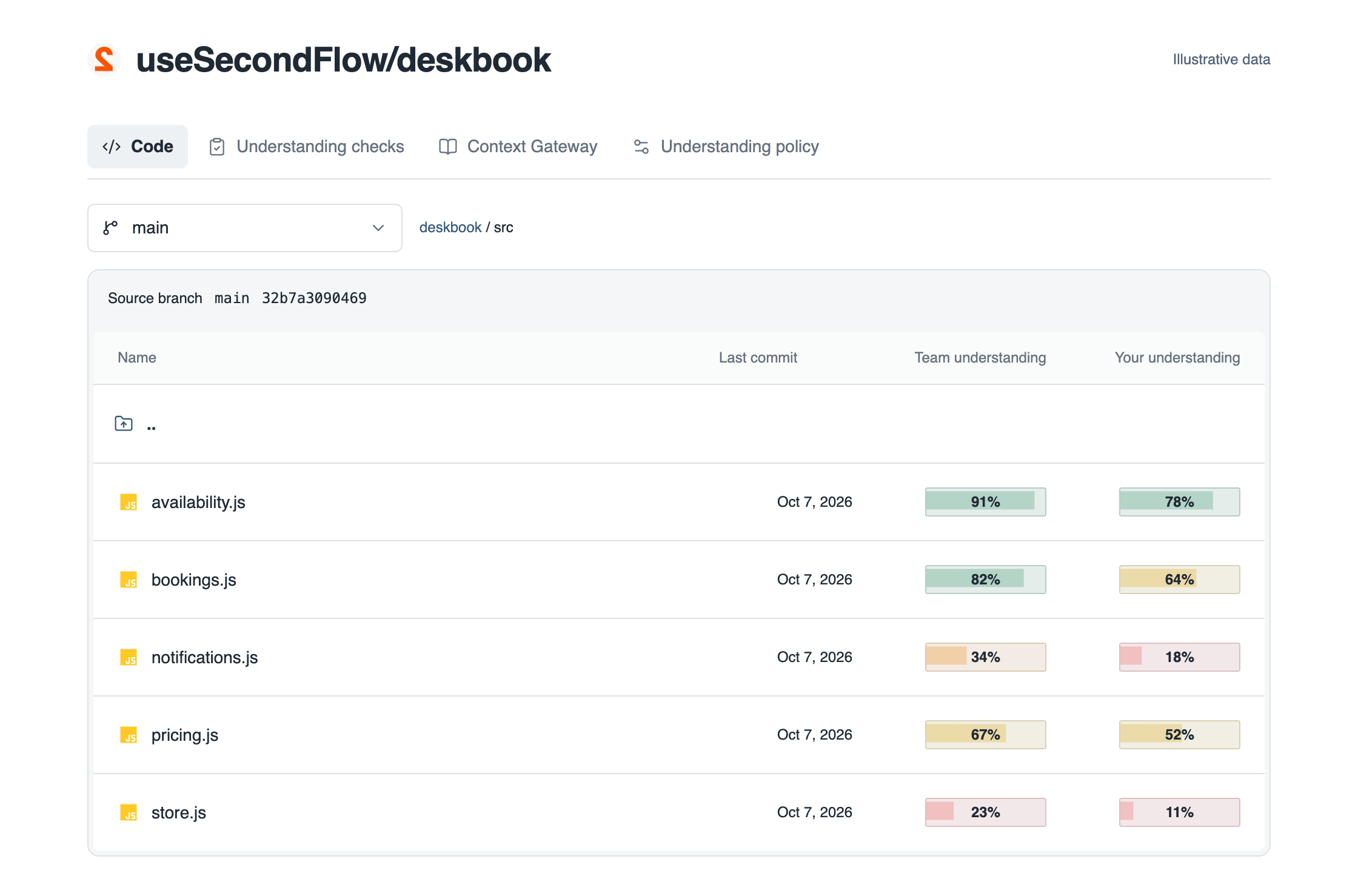
Compare team and individual understanding across your files. See where coverage is strong and where more explanation would help, then open a file to inspect the evidence.

Illustrative repository view of deskbook's src folder, comparing team and individual understanding across five files with coverage estimates ranging from 11% to 91%.

See where your team understands the code.

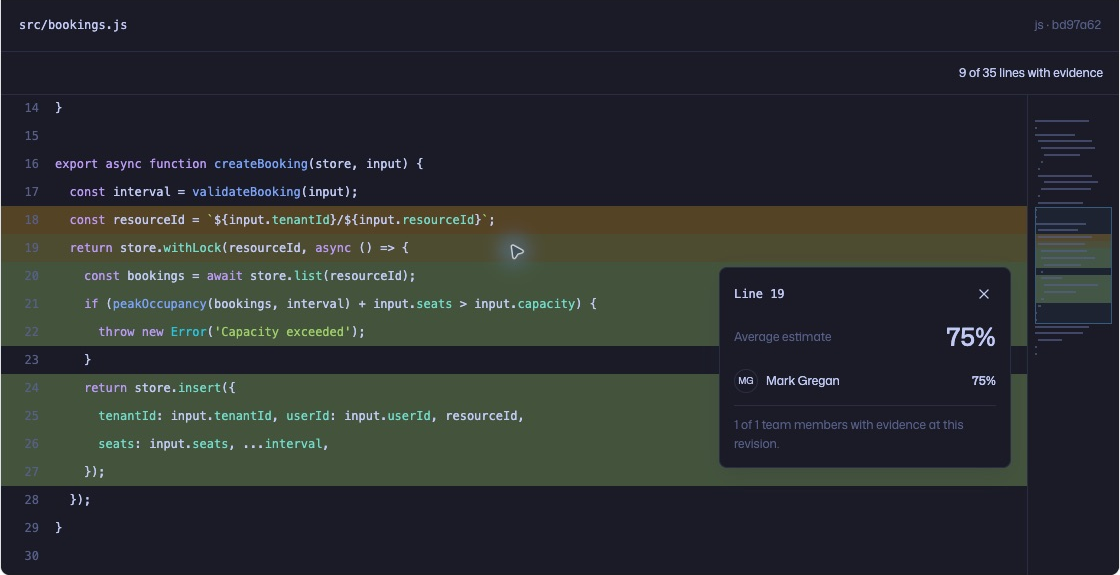
Source coverage maps evidence from explanations back to the code. Inspect a highlighted line to see each team member's understanding estimate at that revision, and where evidence is still missing.

Source coverage in src/bookings.js, with highlighted lines and an open tooltip for line 19 showing a 75% average estimate and the contributing team member's 75% estimate.

The missing signal

A green test suite says the code runs.Understanding the change takes a different kind of coverage.

AI is changing how code gets written. Second Flow makes understanding part of every meaningful change.

Context Gateway grounds every check.

Connect the sources that explain why the change exists and how the repository is meant to behave. Second Flow retrieves only the scoped context needed for each understanding check.

GitHubGitLabBitbucket

Code and change

Pull request, diff, and nearby files

Project documentation

Architecture, runbooks, and product guidance

Work tracking

Intent, requirements, and acceptance criteria

Repository and internal knowledge

Project guidance and approved internal tools

Focused contextContext for this change
  • Changed behavior
  • Repository constraints
  • Why the work exists

Questions shaped by behavior, intent, and project context.

The practical details.

Tests cover execution and code review covers quality. Second Flow adds understanding of intent, data flow, and system impact.

Second Flow focuses on changes with meaningful behavior or context. Small and documentation-only pull requests stay mergeable when no understanding check is needed.

Yes. Select repository source to create an understanding check at a fixed revision. Source coverage maps the resulting evidence back to the code, with details showing which team members have demonstrated understanding.

Yes. Second Flow returns a GitHub check that teams can make required through repository rules.

An ownership signal shows your organization how well engineers understand the logic and flow of the AI-generated code they ship.

No. Second Flow reports on submitted explanations, eligible changes, and code areas without creating individual leaderboards. Ownership signals support code review and coaching; they are not a standalone basis for employment decisions.

Context Gateway connects code, project documentation, work tracking, repository guidance, and approved internal tools. It scopes that context to the current change so questions stay relevant.